

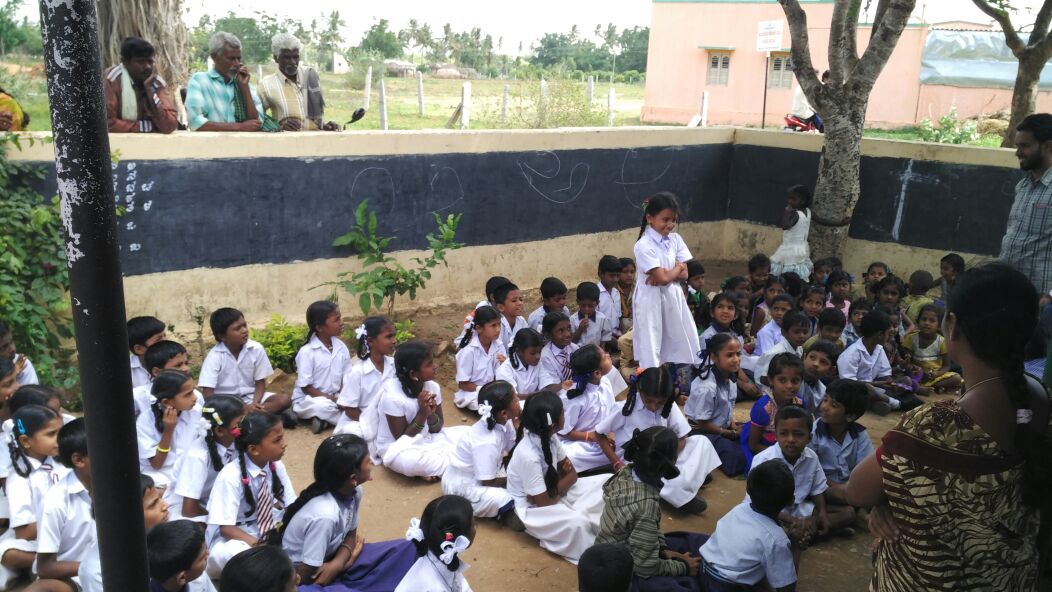
Learning at one’s pace. This is what I understood from the internet and my experience in the schools
Developed in 1995 by teachers in Karnataka’s Mysore district, the Nali Kali strategy adopted creative learning practices to help retain children in school and bring in those not attending school.
The child’s ability is measured on a learning ladder and the entire process is split into milestones or phases for every subject. The child can asses his progress himself.
It relies on joyful learning and is child-centered. Peers are the first source for help.
To master every milestone, the child has to go through several learning activities called learning steps. This includes the reading part of it, the writing and the physical experience.
For eg: Teaching festivals, fairs, and ceremonies (Habba, Jatre, Samarambha).
1) The teacher asks the students to bring supporting materials like newspapers, magazines, pictures.
2) A poem or song is taught regarding this subject
3) Different kinds of festivals etc are explained the children then have to categorize them in their charts.
4) A role play is conducted. eg: wishing on birthdays, dancing to drums in fairs, etc.
When a child is able to complete these steps, it is marked accordingly in his progress chart or Pragati Nota.
There are a series of Plate cards or Thatte cards/charts that takes the child through these steps.
In reality, a child picks a card/chart and sits in the table assigned (on the plate-card) and works on these steps. This way, there are at least 3 people learning the same concept but in a different way.
Hence, the requirement of a small circular nali-kali table. As of now, the circles are pre-marked in the flooring (maybe in the different color) and the kids sit there but have issues when writing.
Nali-Kali Materials supposed to be provided:
Pebbles and crayons
Rubber letters
Geometrical shapes
3-D Geometrical shapes
Dice
Word game board and flashcards
Number puzzles
Teacher learning materials
The charts, plate-cards, progress charts, workbooks are provided and all schools have them